
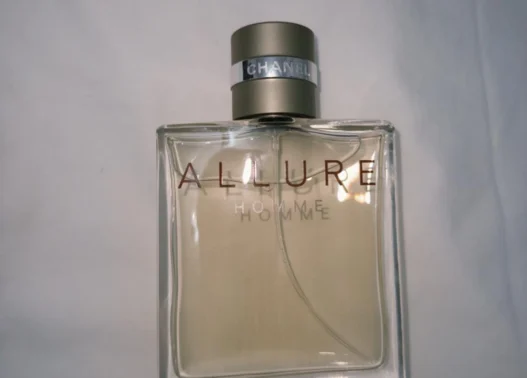
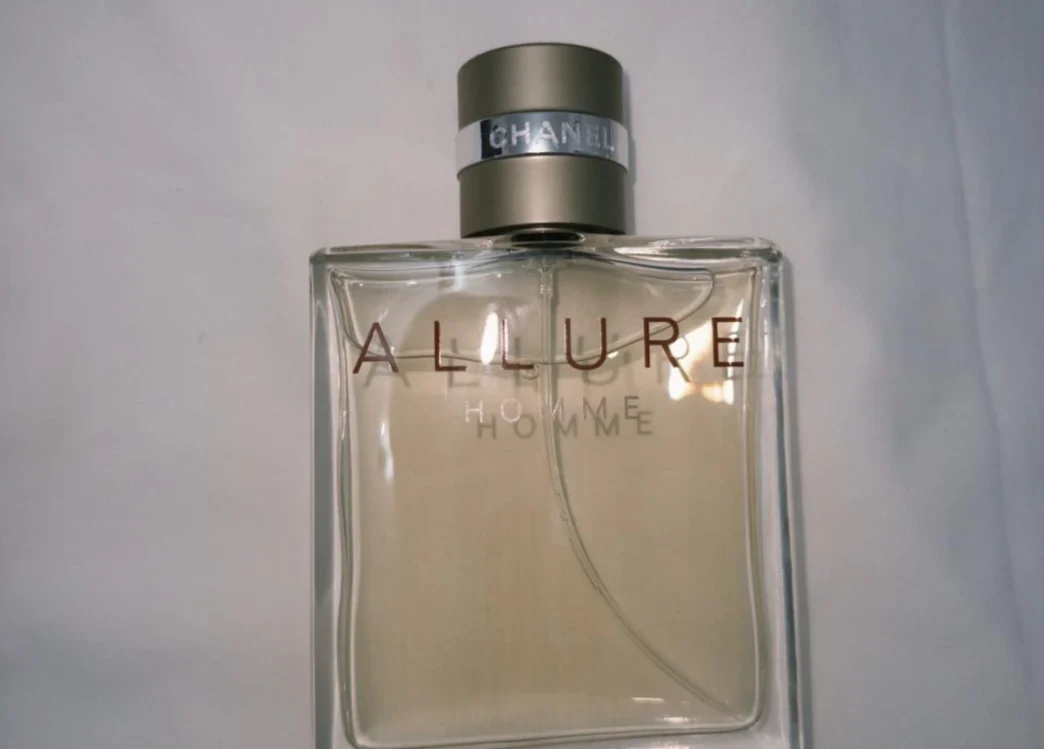
Introduction
Chanel Allure Homme arrived in 1999 at a time when masculine perfumery was shifting away from overt fougères toward cleaner, more abstract constructions. It sits quietly within the Chanel men’s lineup, neither framed as radical nor deliberately nostalgic. More than two decades on, it remains in circulation largely unchanged, which makes it useful to assess not as a trend piece, but as a study in balance and long-term positioning.
Scent Profile
The structure is deliberately dense. Citrus notes—lemon, bergamot, mandarin—open the composition with clarity rather than sharpness. This freshness is quickly intersected by black pepper and aromatic lavender, creating an impression that leans clean without becoming overtly barbershop. As it develops, the fragrance reveals a restrained sweetness built around vanilla and tonka bean, softened by sandalwood and benzoin. Musks and vetiver introduce a soapy, polished undertone, while leather and woods sit quietly in the background, adding texture without dominating. The impression is not linear; elements overlap and recede rather than resolving into a single identifiable theme.
Performance
Longevity is consistent with expectations for an eau de toilette of this style. On skin, it typically remains detectable for seven to eight hours, with projection kept intentionally close. The opening carries moderate presence for the first couple of hours before settling into a subdued personal radius. From the mid-wear onward, it behaves largely as a skin scent, fading cleanly without abrupt shifts. The performance supports the fragrance’s controlled character rather than working against it.
Wearability
Allure Homme is adaptable across seasons, largely due to the way its freshness and warmth are evenly weighted. The citrus and aromatic elements allow it to function comfortably in warmer conditions, while the creamy base gives it enough substance for cooler months. In practice, it works well in professional environments and formal settings, where restraint is often preferable. It is less suited to situations that demand projection or immediate impact, relying instead on proximity and familiarity.
Positioning
Within the broader Chanel portfolio, Allure Homme occupies a transitional space—more intricate than the Sport variations, but less assertive than later releases designed for contemporary mass appeal. Its popularity over time has reduced any sense of novelty, yet it retains a recognisable identity that avoids feeling generic. Age associations tend to skew mature, though the structure itself is not prohibitive to younger wearers, particularly those seeking something understated amid louder modern offerings.
Verdict
Chanel Allure Homme stands as a composed, methodical fragrance built on integration rather than contrast. Its relevance today lies less in distinctiveness and more in how coherently it brings multiple facets together without excess. For those drawn to discretion, cleanliness, and balance over projection or immediacy, it remains a credible option within modern masculine perfumery.